
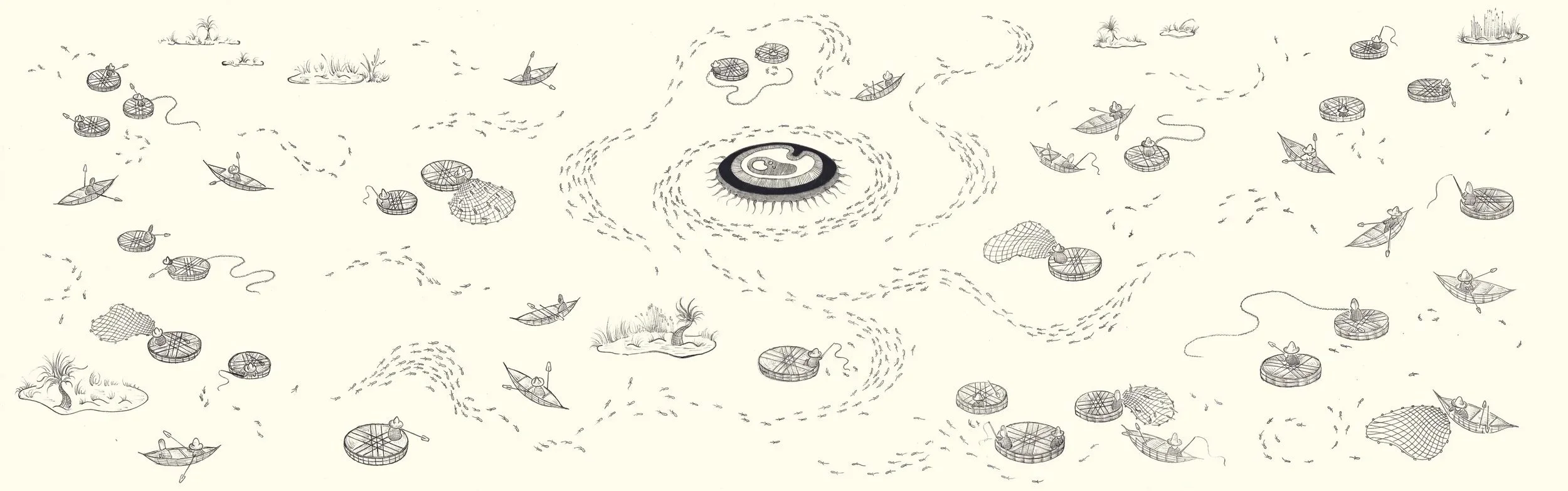
DREAMTIME
A deep delve, cradled in waters,
Cloud silt; slick and viscous.
Our flowing body lies abed,
The muddied birth caul of all creation.
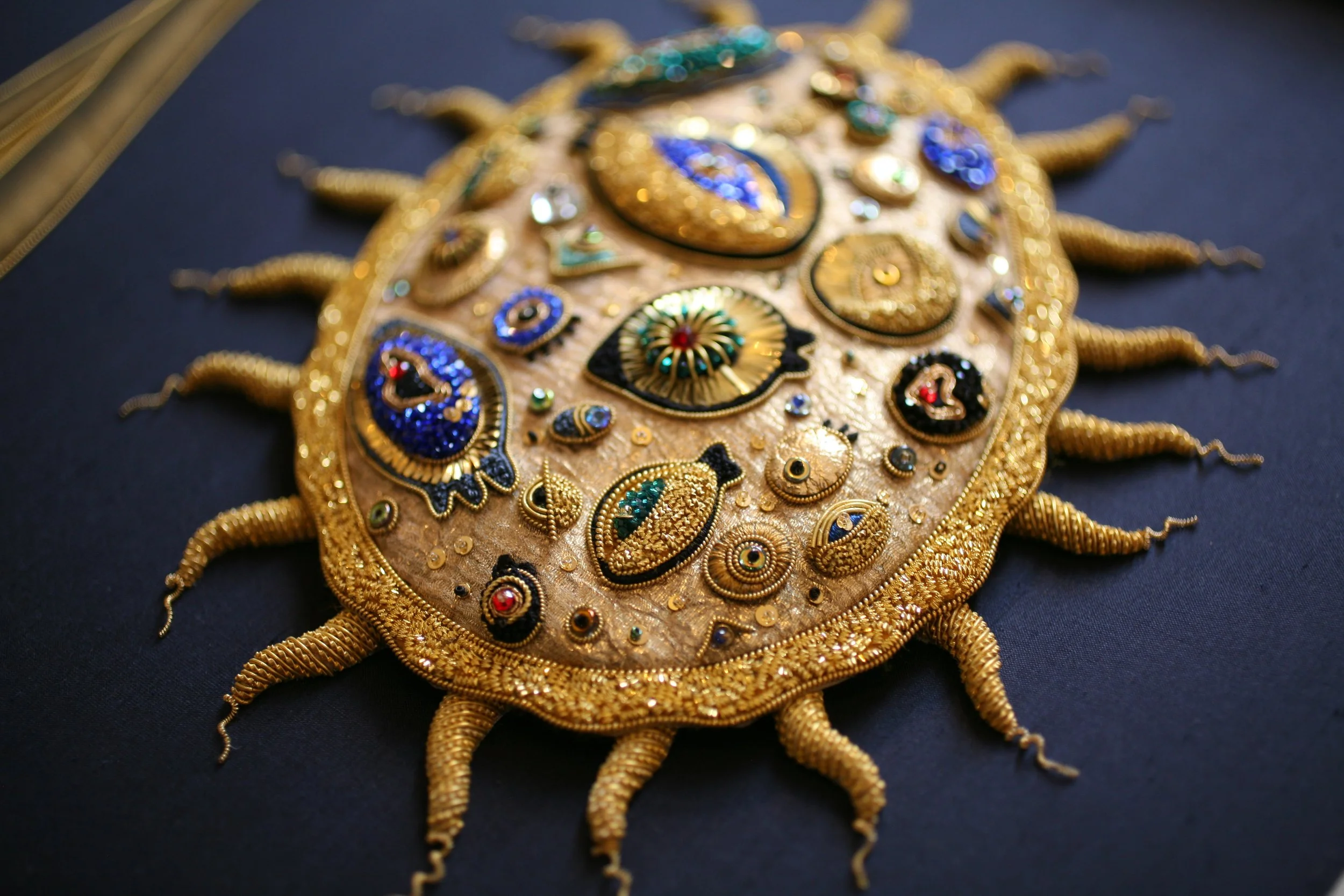
Like a Tibetan Thangka Mandala or meditation painting, this work is best contemplated in dim half light with a subdued background.
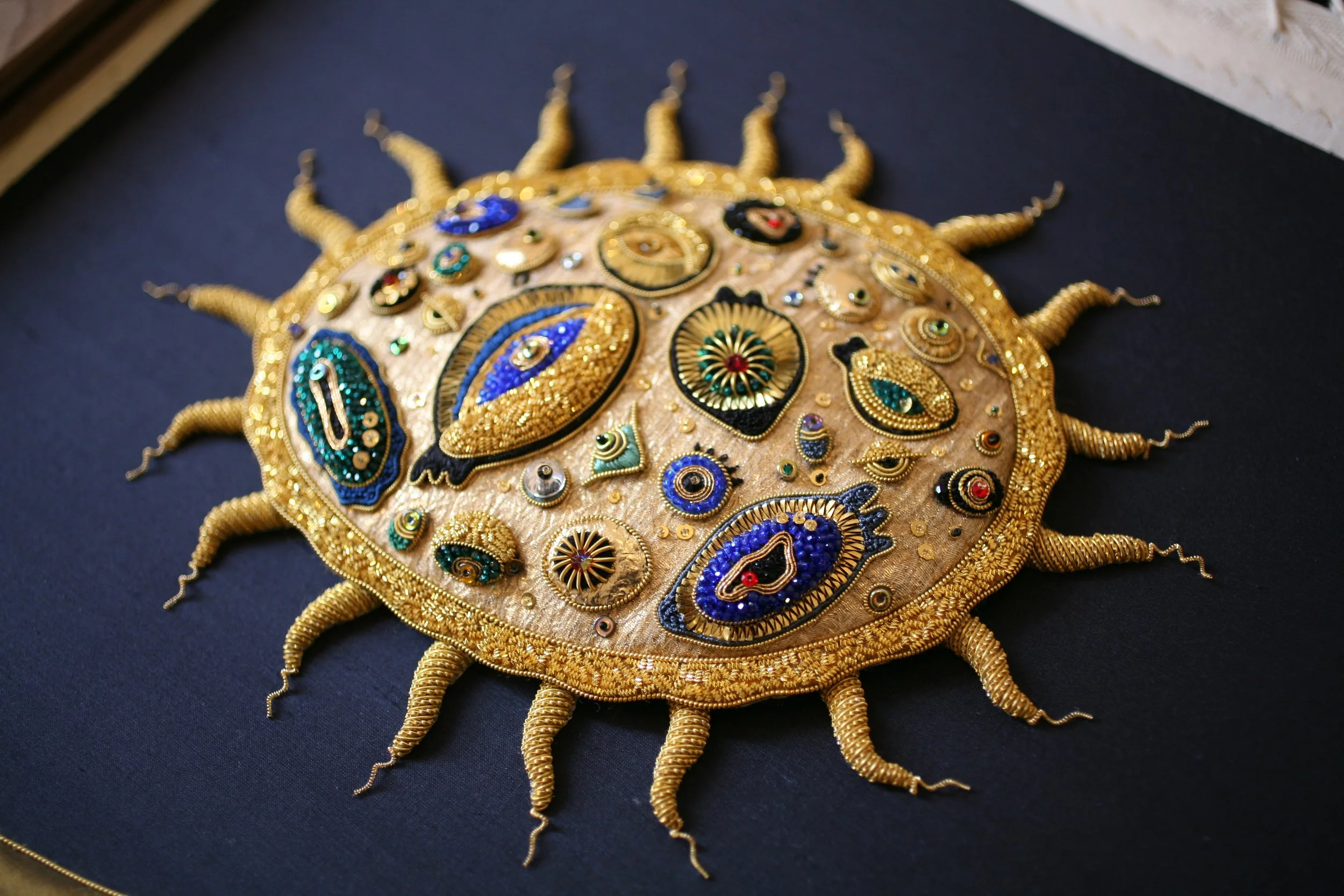
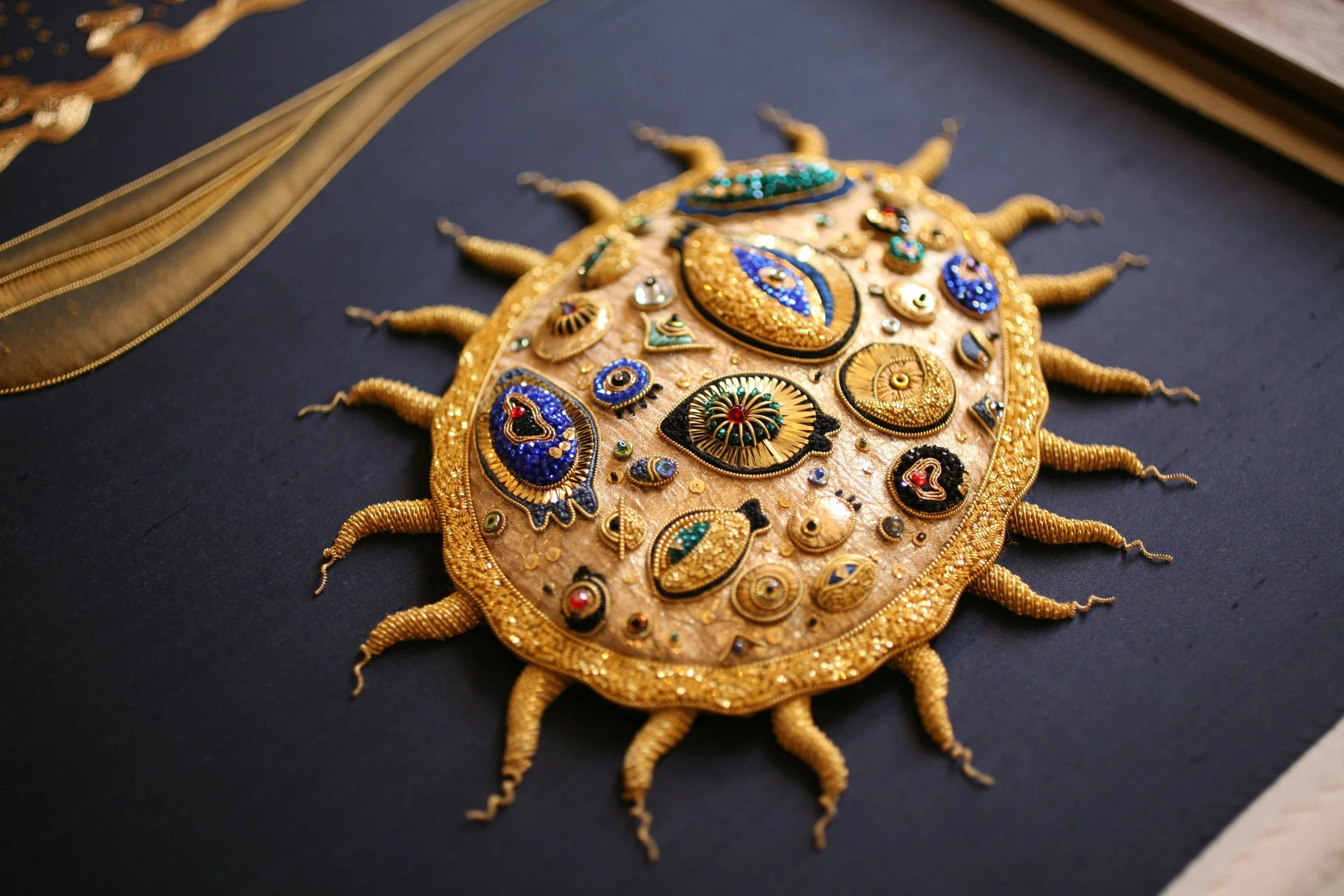
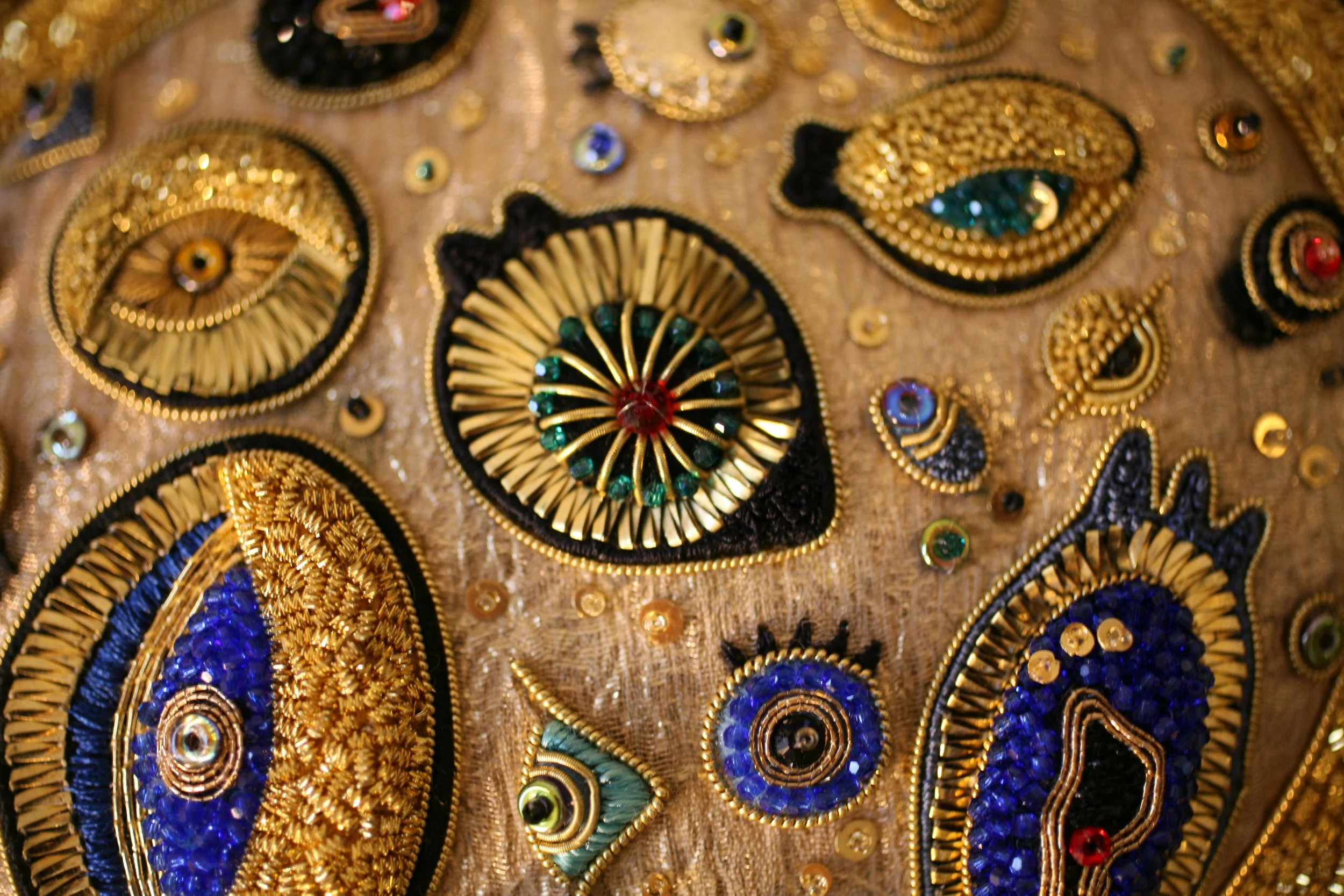
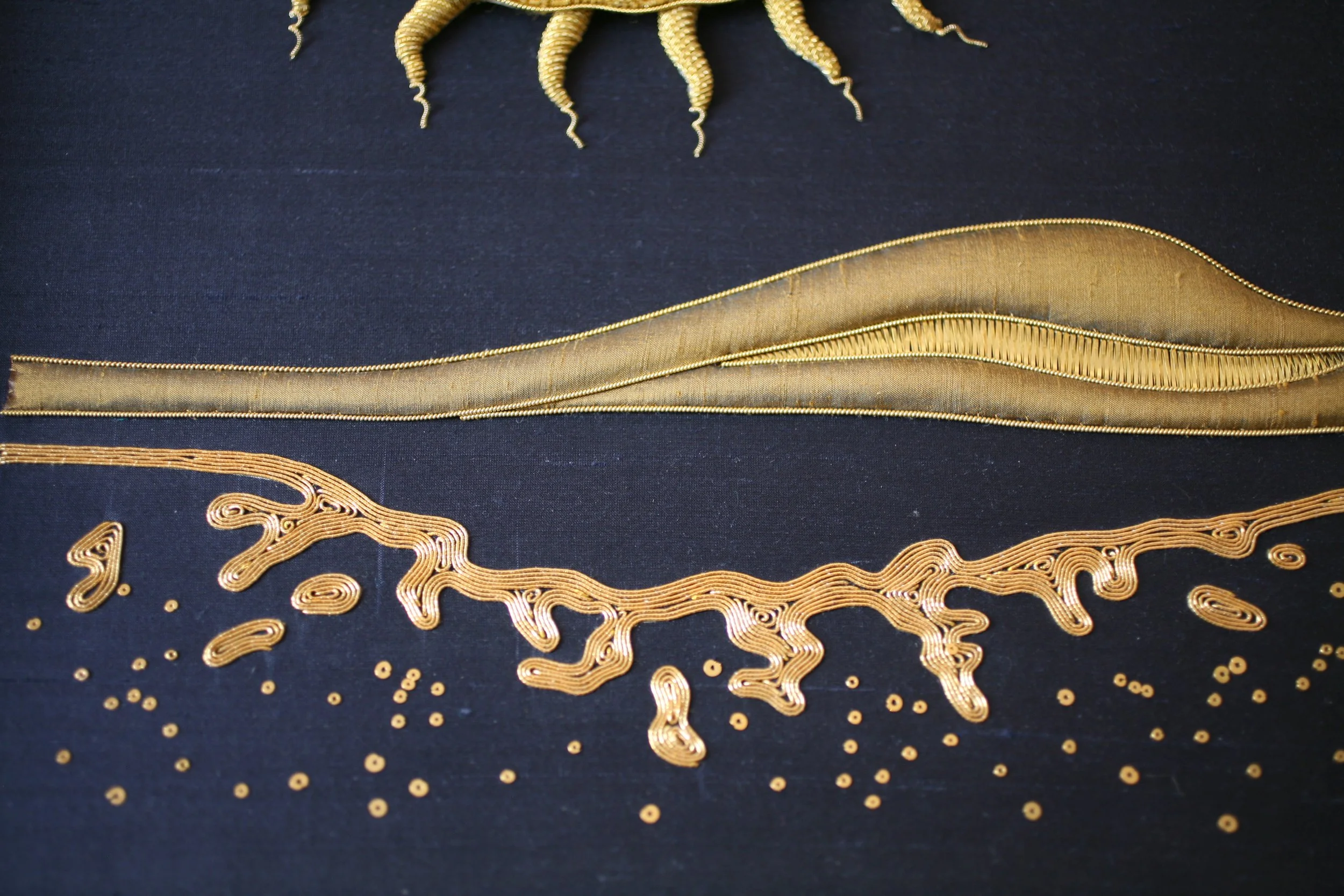
Many stories and personal mythologies have seeded from this original landscape, titled Exstasis, rendered in gold wires and crystal beads.
I would like to share how the work became by explaining my state of mind at the time it was illustrated: relaxed and mentally prepared, without having overthought any images or concepts. The process alike to automatic drawing, where the subconscious guides the hand across the paper, uninhibited by intention. Since rendering the drawing into being, I have collected various thoughts, feelings and philosophies to interpret the work. They connect like a web, deepening the personal meaning of the object, which I now consider to be fully loaded, or charged.
This process of creation and imbuing could not have happened without the initial stimulus, which seemed to come entirely from elsewhere. I’m reminded of the Greek word Nous: the spiritual eye through which we experience theoria, communion with the divine form, or universal wisdom. It is what connects us to the absolute; our glimpses becoming the seeds with which we sow our creative endeavours.
To further elaborate on the nature of the object and my psychic workspace, I’ll briefly mention the artist and occultist Austin Osman Spare. One of his beliefs was that the established thought complexes and obsessions of the mind were, in some sense, alive, rather like spirit entities. Within his imagination, they became objectified. He gave them form and character, illustrating them in detail in self-portraits of himself at his desk, surrounded by the artefacts of his living mind.
By giving thought complexes a tangible form of embodiment, we solidify them, allowing us to conjure them with much greater ease. These forms also become vessels in which to expand and develop ideas, much as a living human being holds it’s own unique experience.
It is no coincidence that Gold wires were traditionally used in sacred art: their intricacy and beauty aiding a worshipful state of mind. I consider Exstasis to be a well crafted tool for the recall of the mind and for the viewer, perhaps it is a portal back to the spark that initiated the work.
EXTASIS
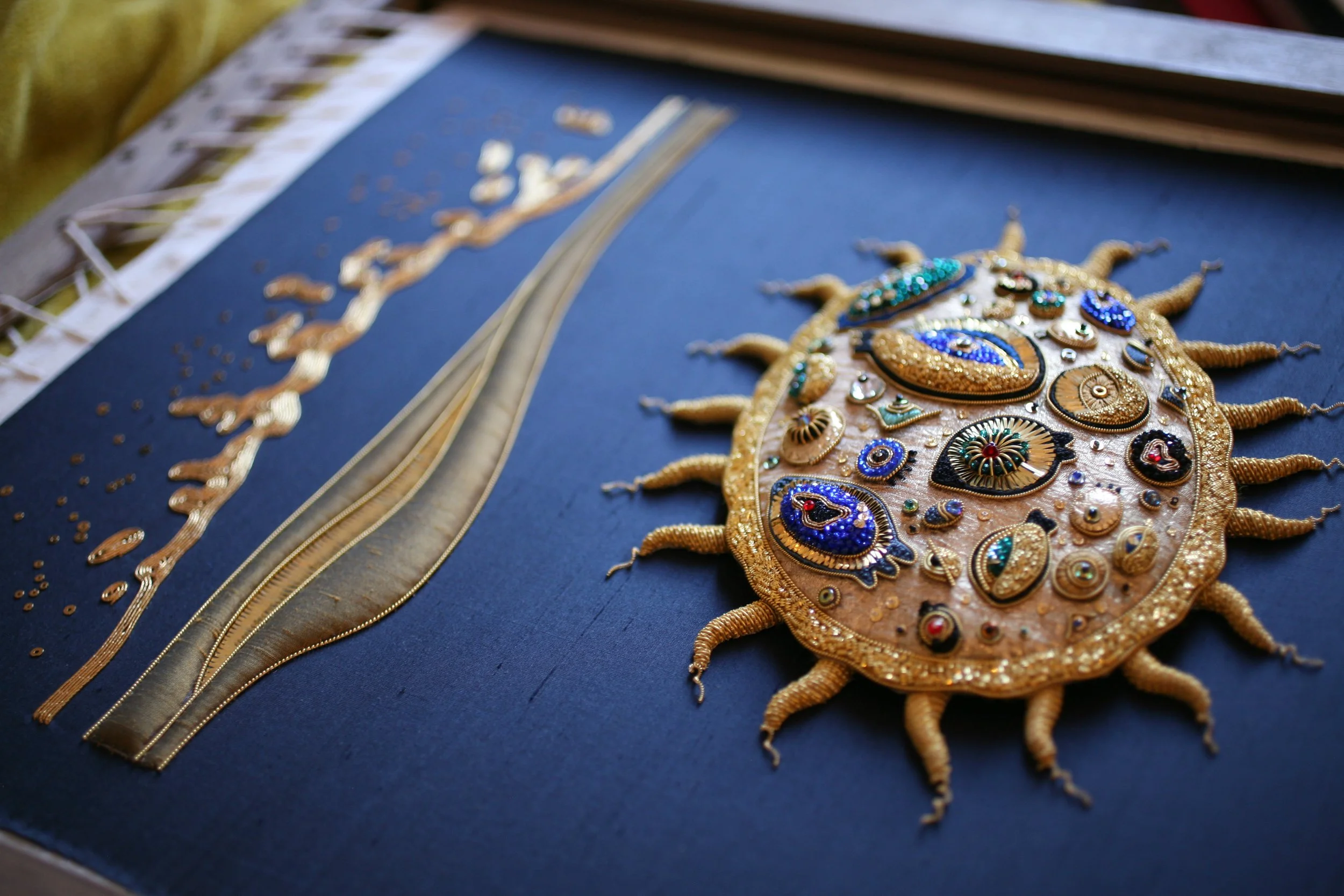
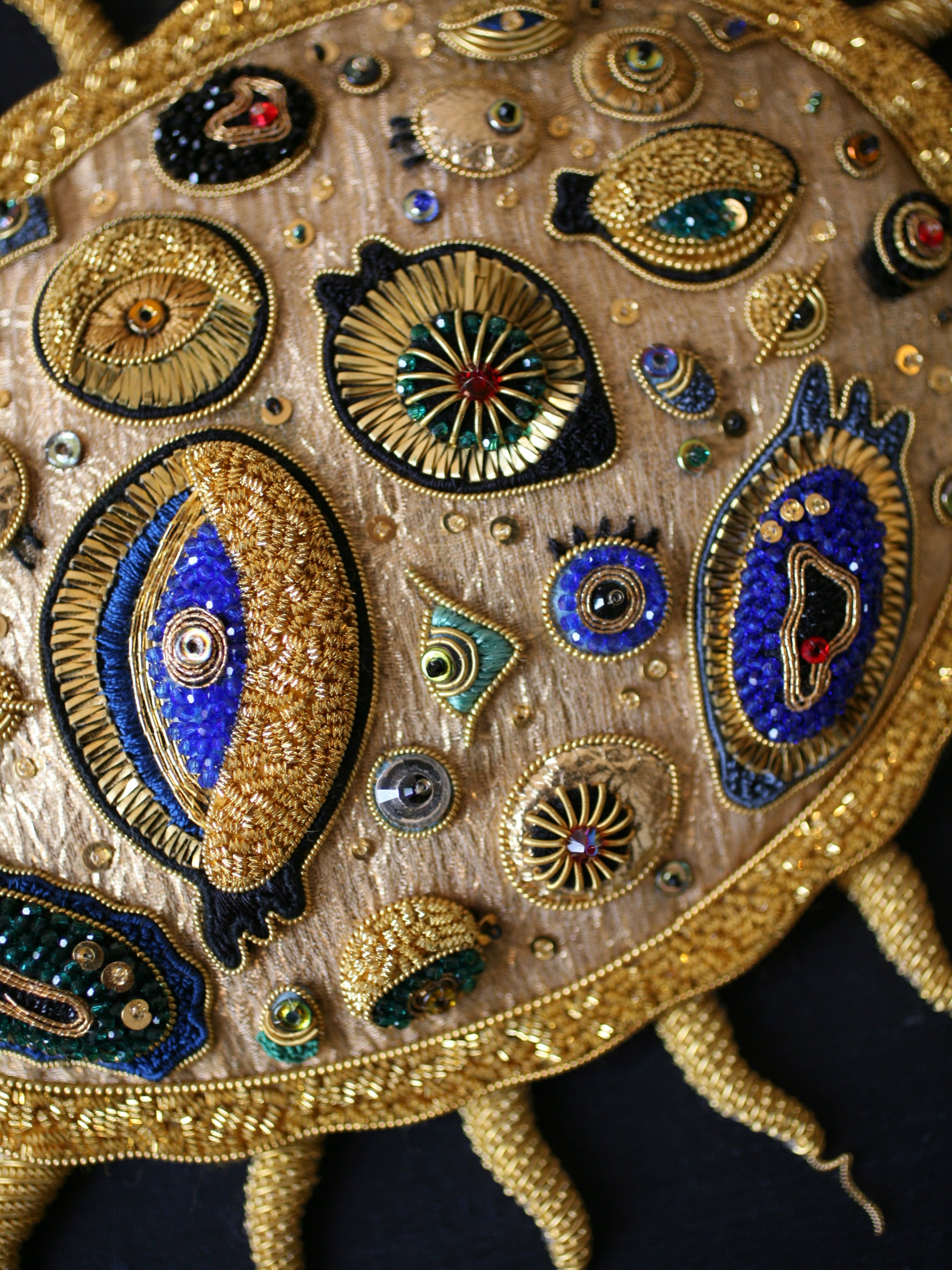
TRAVELLER
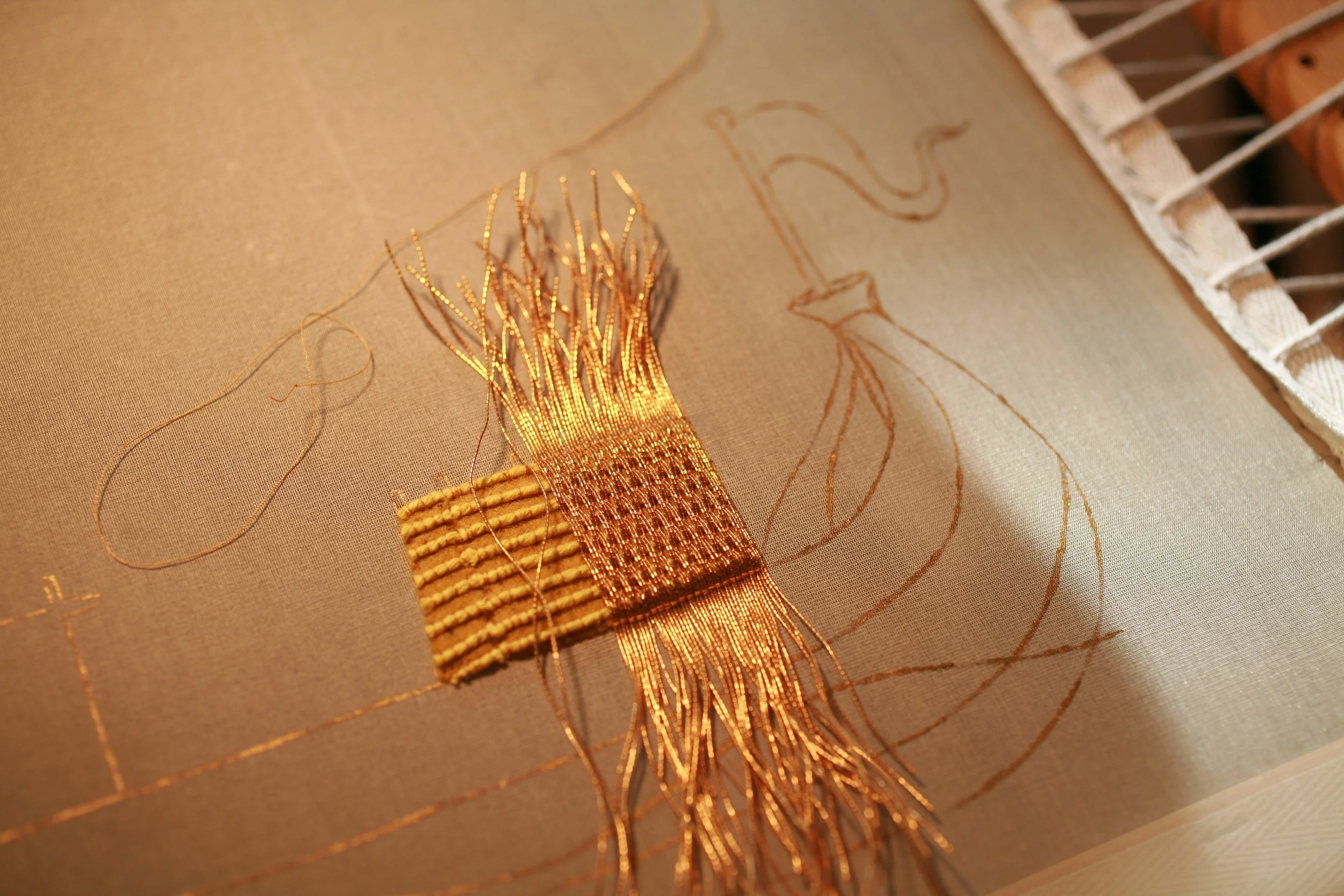
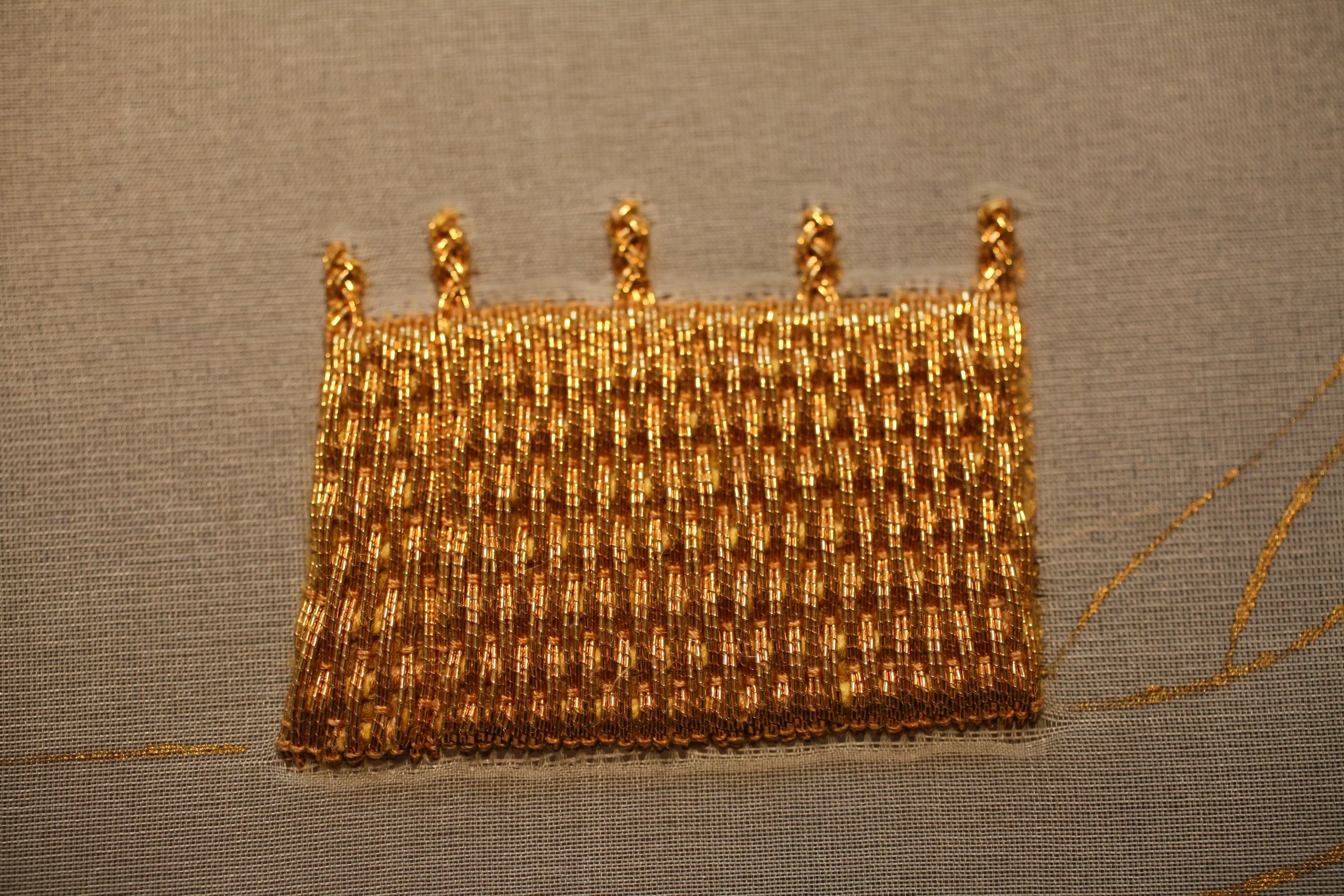
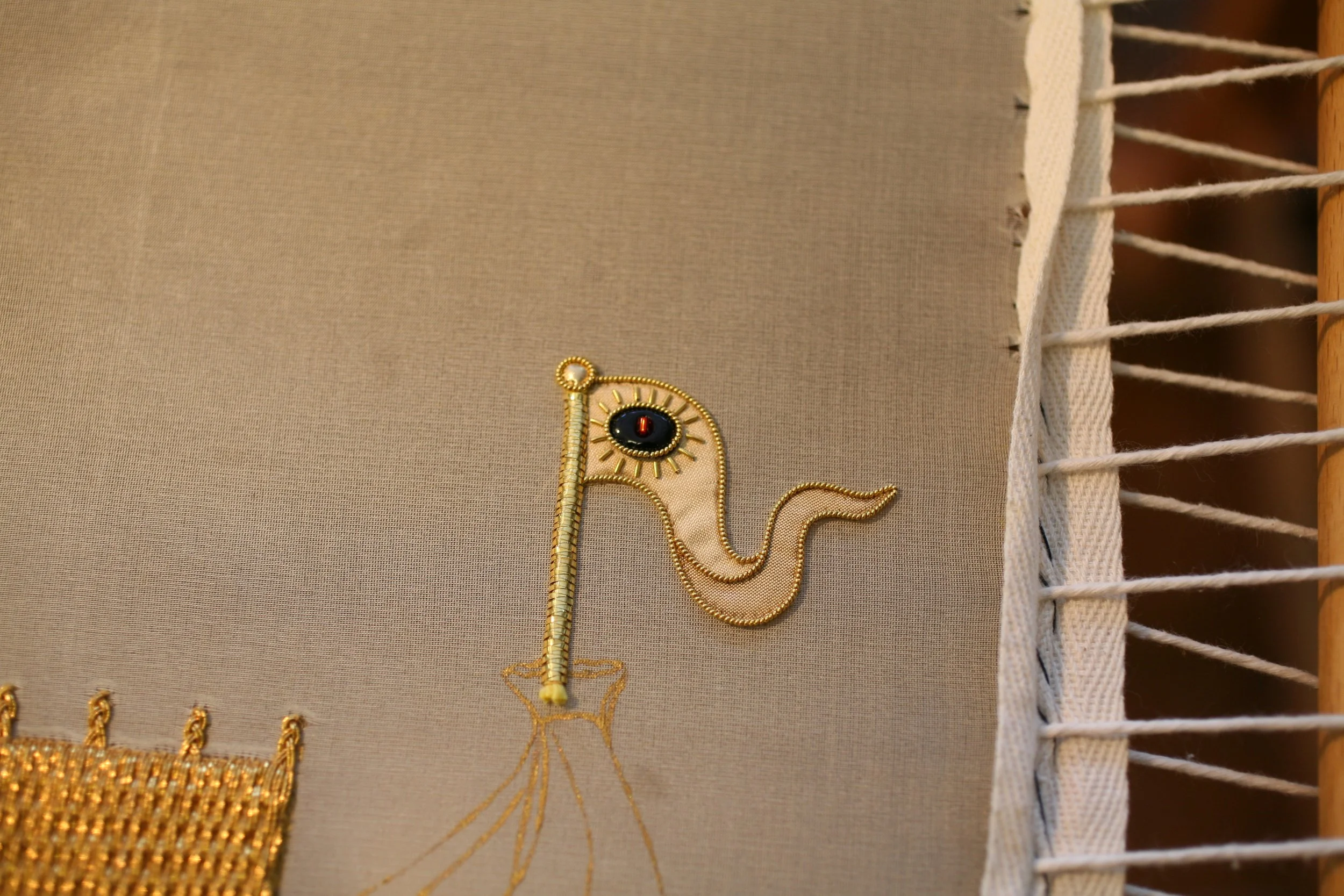
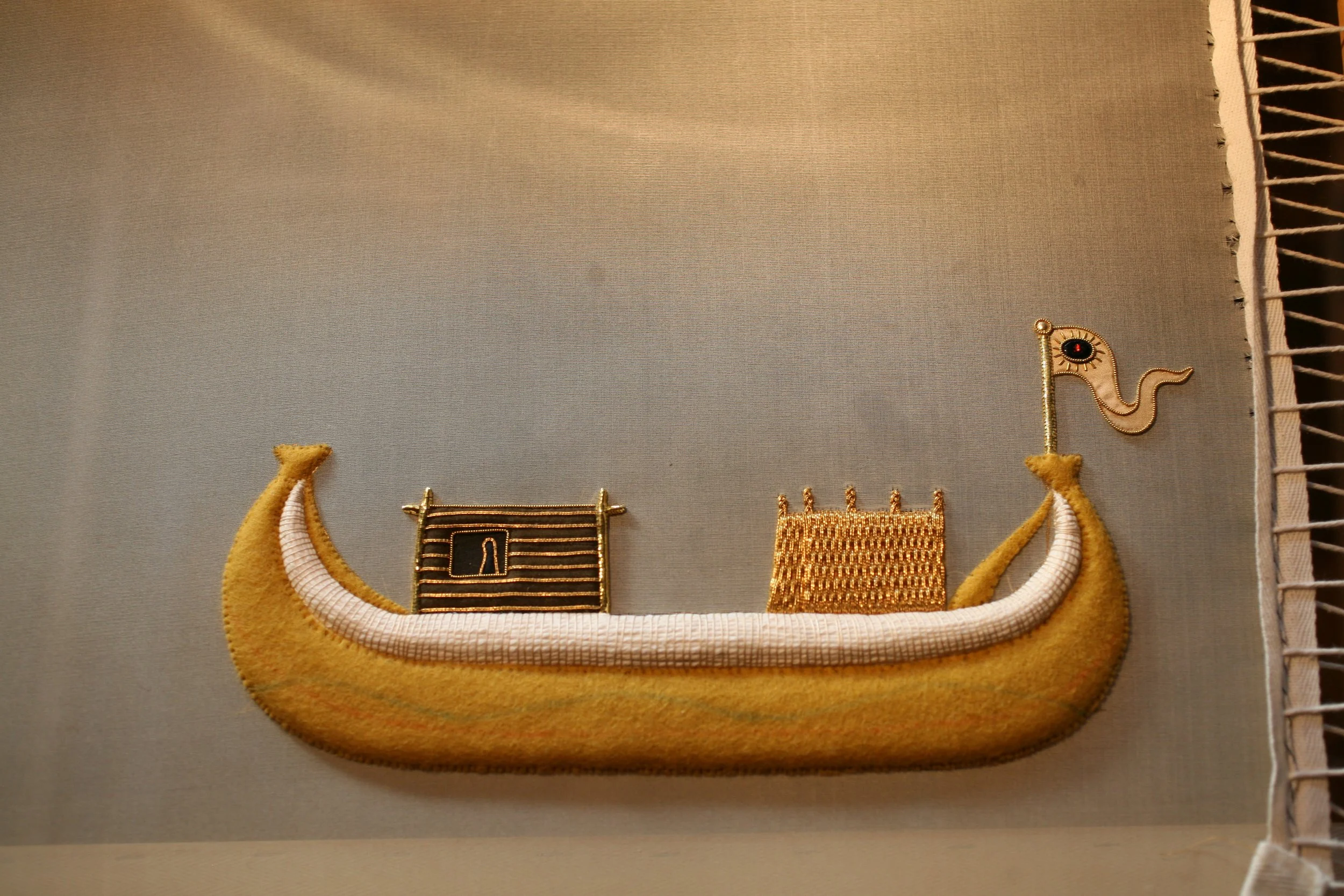
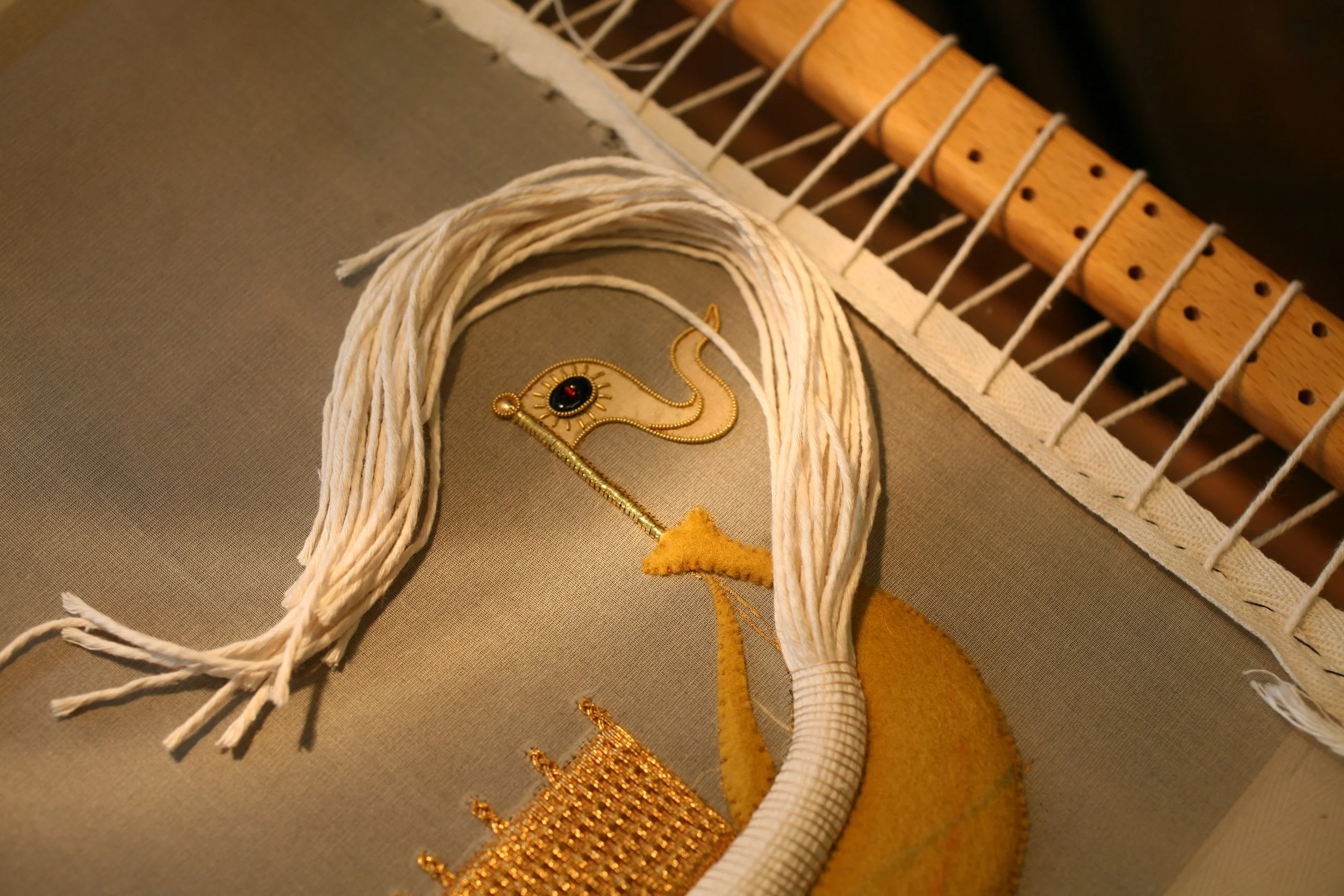
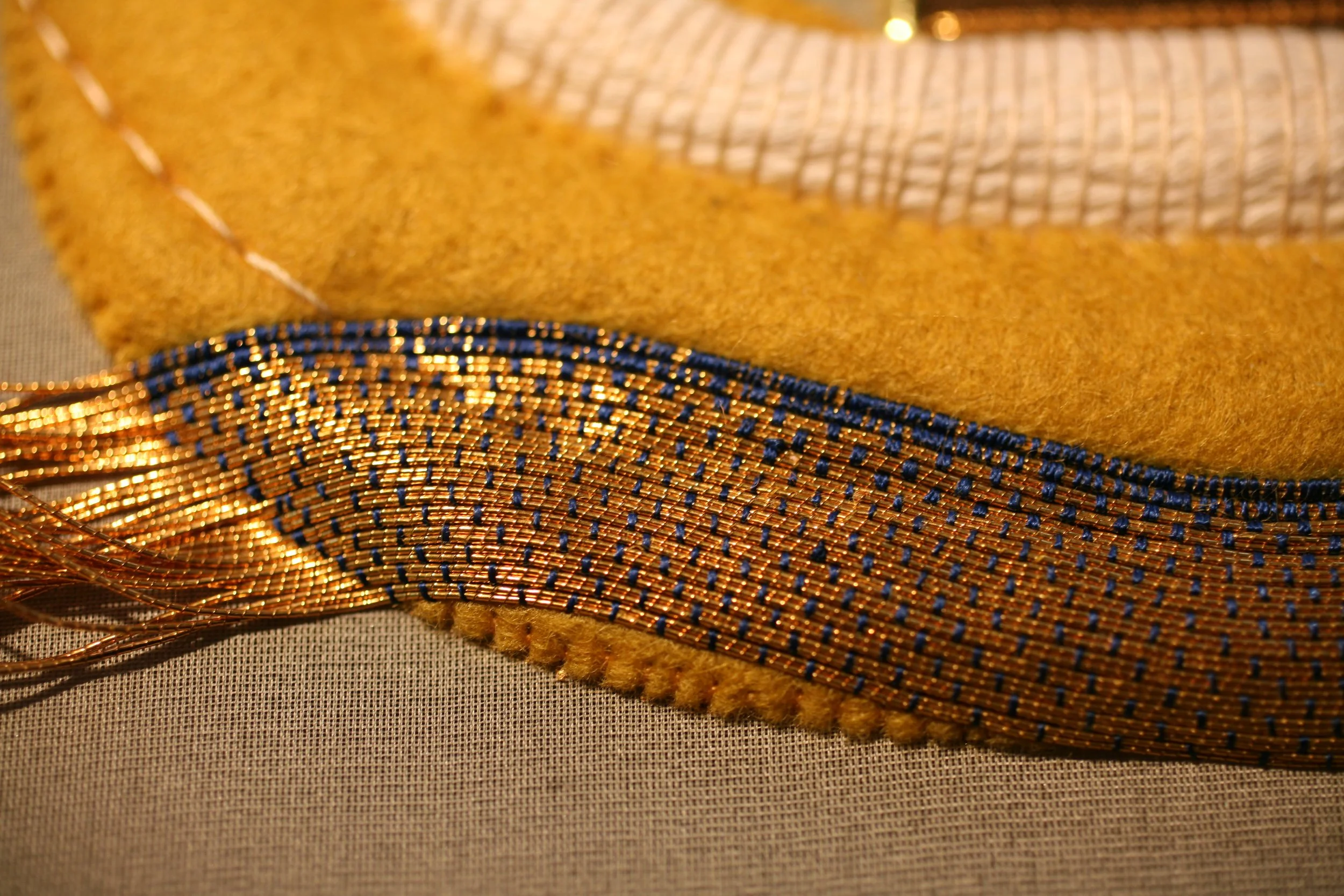
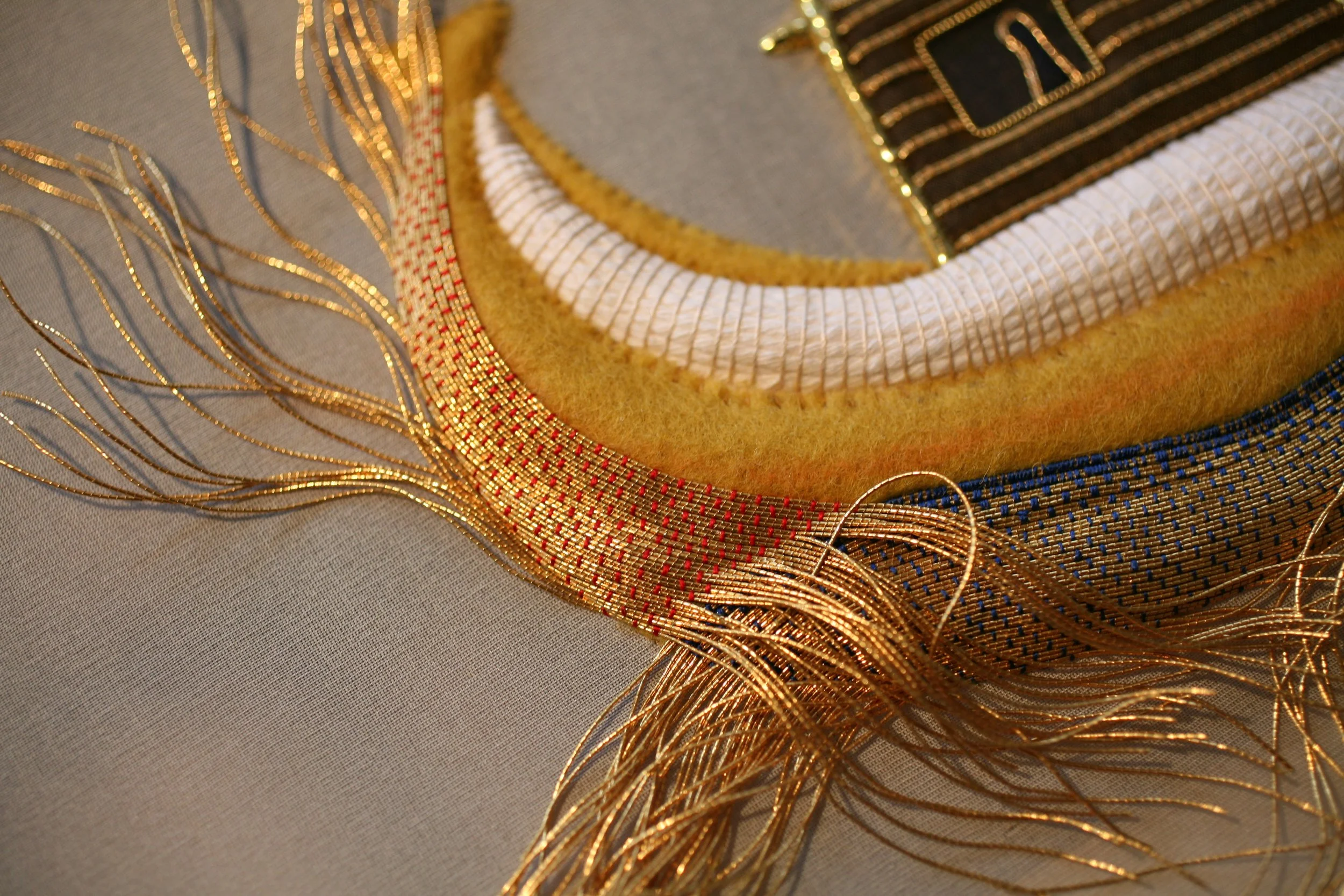
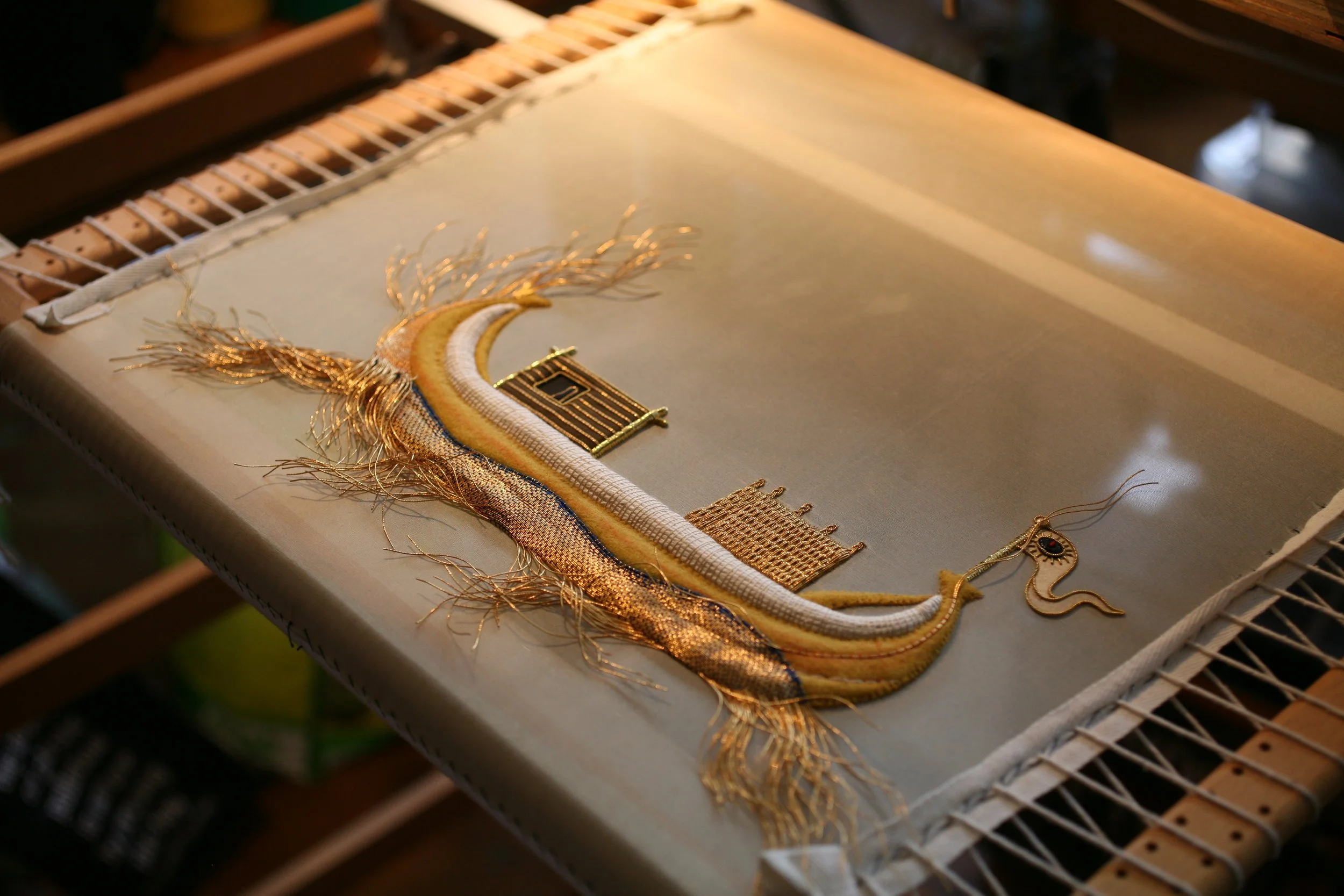
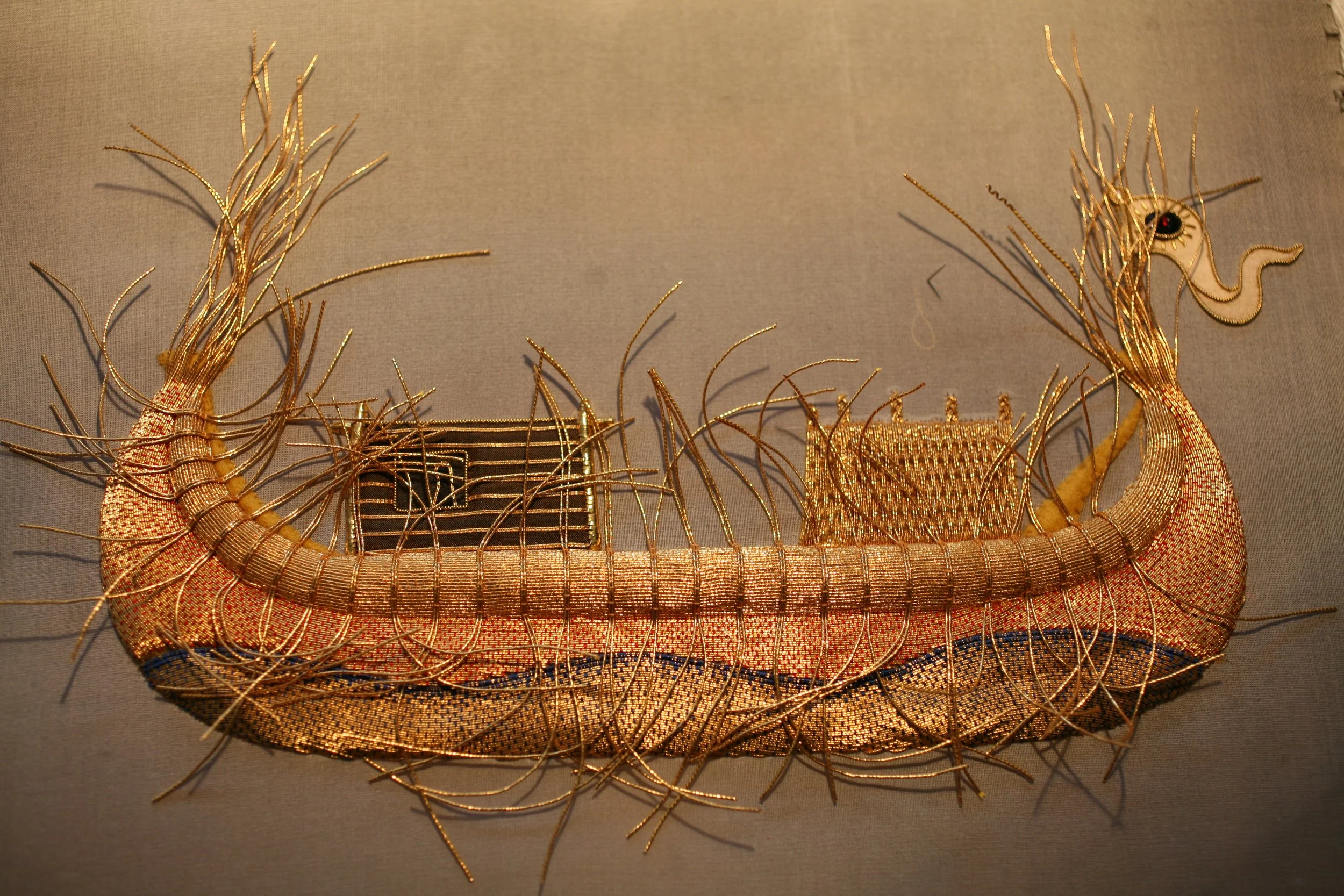
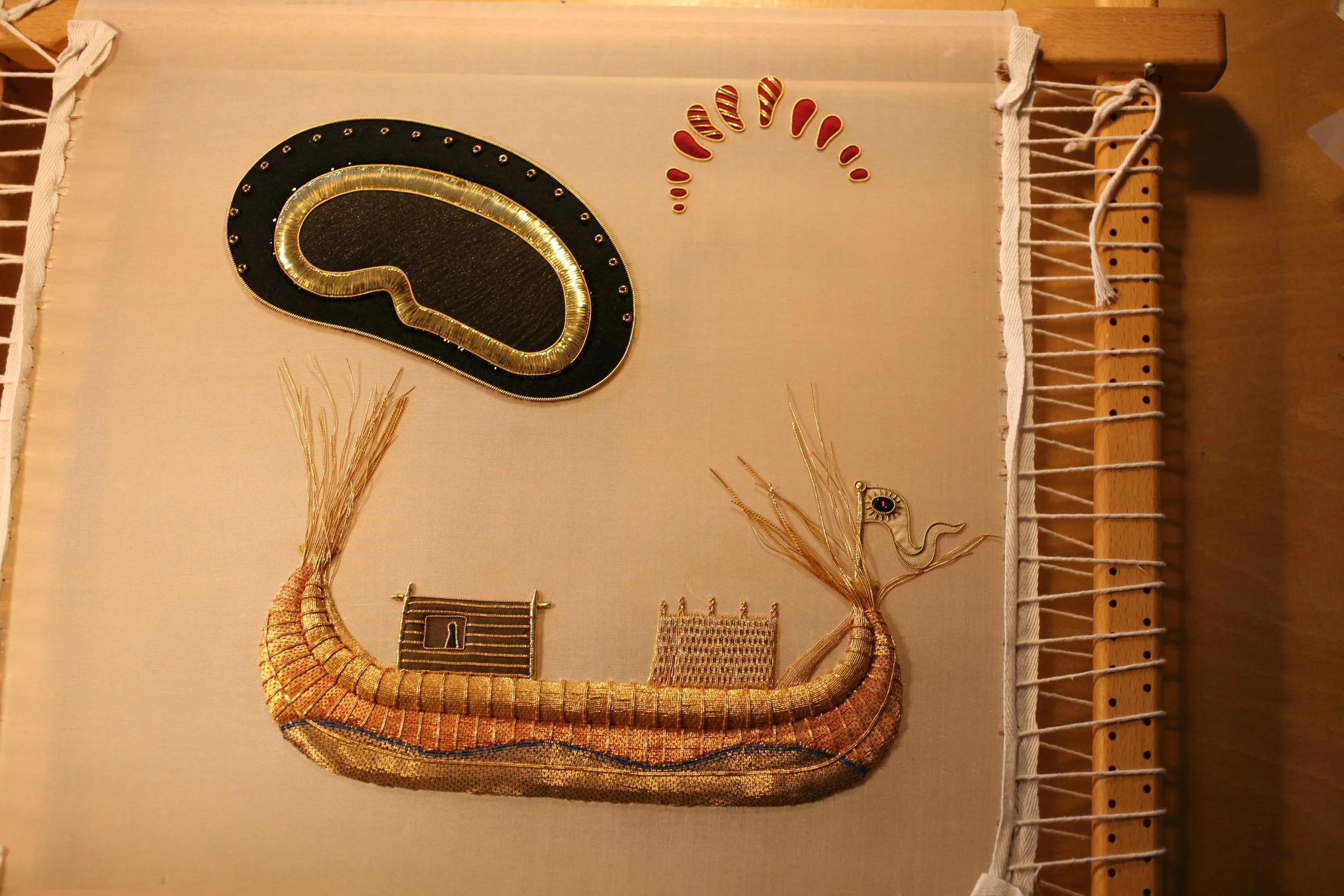
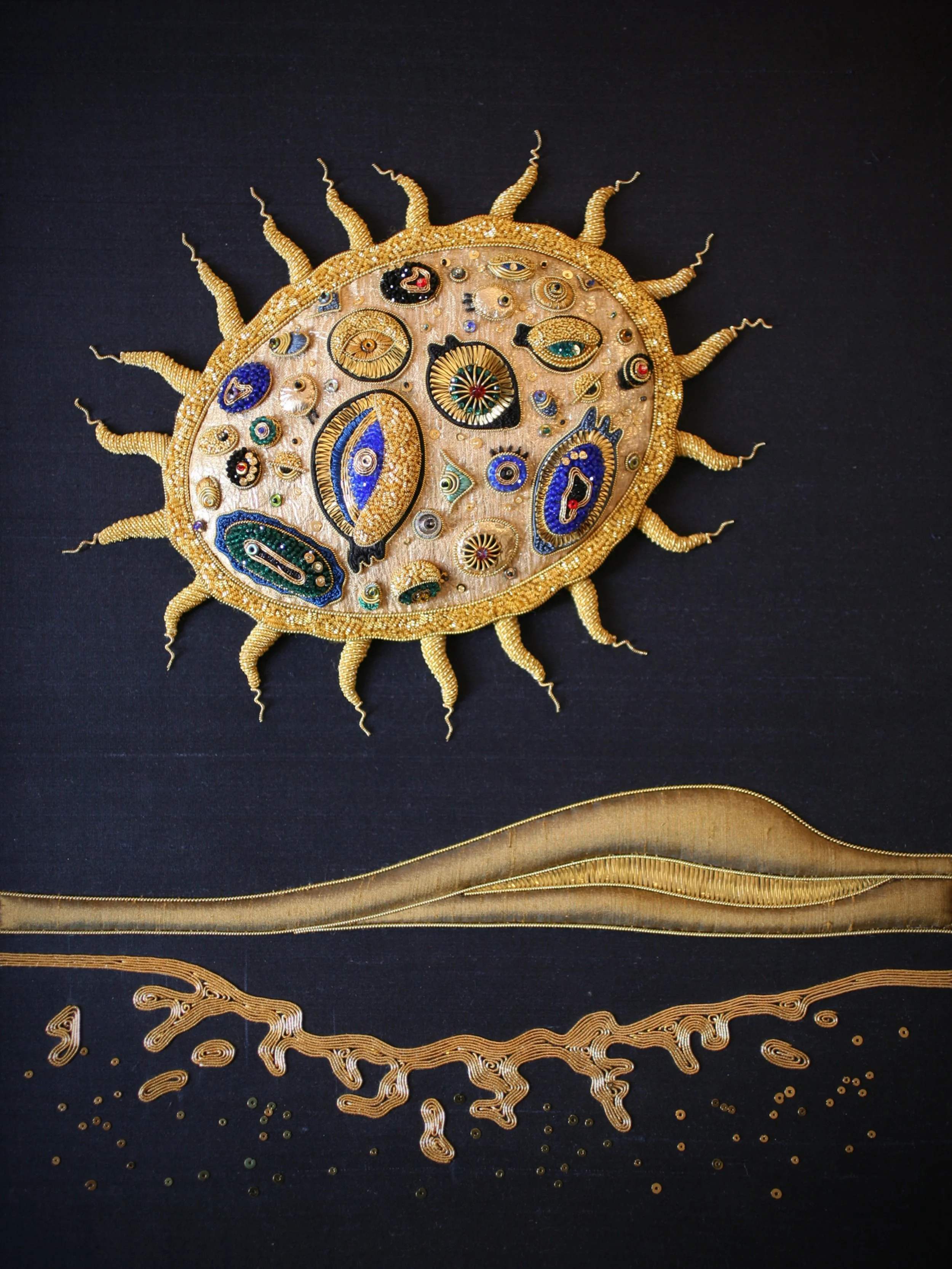
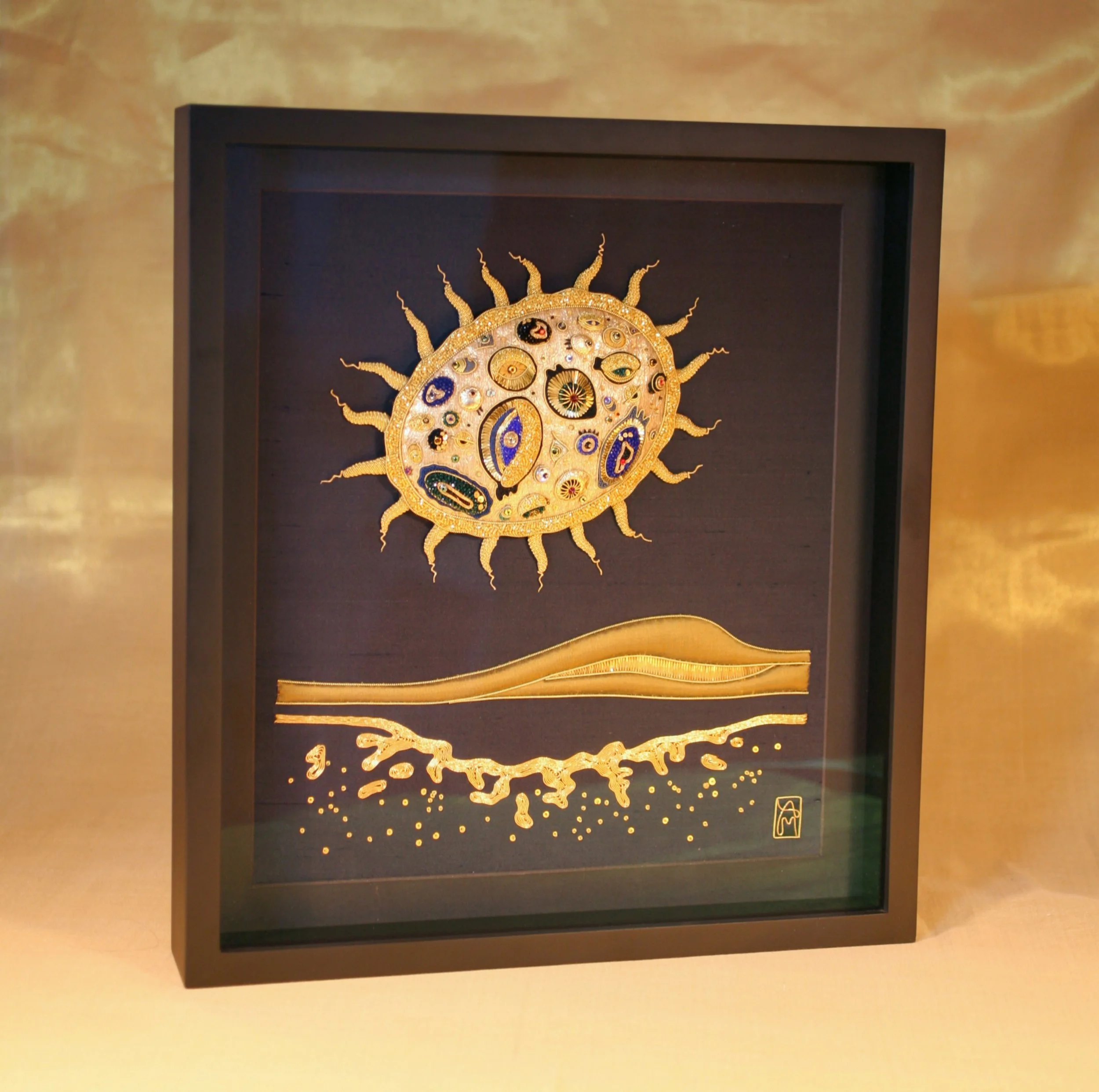
To commence the story; We follow the emergence and evolving journey of seemingly extraterrestrial life forms. They are alike to cellular structures, marine life and planetary bodies. Their story loosely based on events in ancient Mesopotamia, (now modern day Iraq) where the earliest recognised human civilisation evolved into the culture we know as the Sumerian empire.
The illustrated journey and subsequent transformation of these embroidered life forms serve as a metaphor for the paradigm shift in which humans moved from the hunter gatherer life style, to static agricultural practices, leading to organised societies and mass dwellings of humans.
The topography of these landscapes are an important element in imagining the themes for creating the illustrations. The expanse of flat plains between the Tigris and the Euphrates rivers were flood controlled and irrigated by the superior technology of the Sumerians around 6000 BCE. This provided the perfect conditions for growing food, abundance and human flourishing. It serves as a fertile beginning for our cantos, in which depictions of aquatic life forms are revealed from under the water. Accompanied by crafted human objects, primitive technologies entwined with the fate of our traveller, on a journey without an end.